
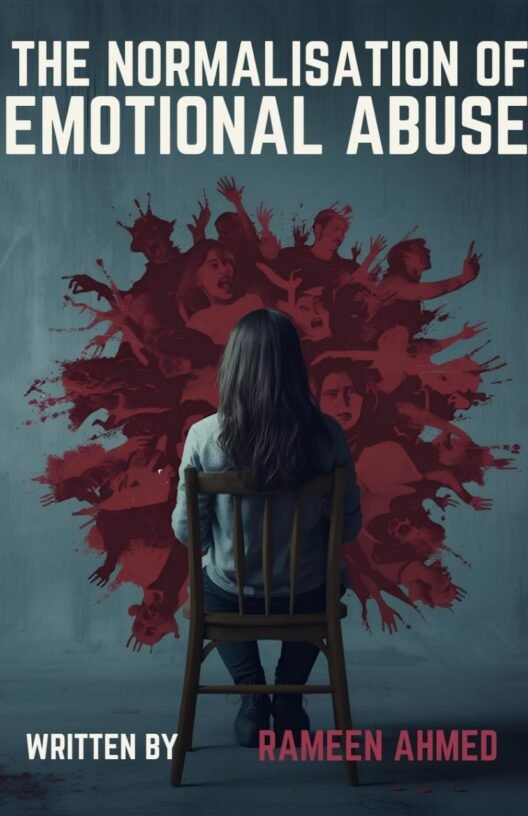
THE NORMALISATION OF EMOTIONAL ABUSE
written by Rameen Ahmed…
Not all abuse leaves bruises on the body; some settle quietly in the mind and heart.
Emotional abuse is often ignored because it leaves no visible scars. Over time, it has become normalised in society, homes, and relationships. Nowadays, people may not cause physical harm, yet they leave deep emotional wounds that damage a person from within. Through constant criticism, gaslighting, silent treatment, mocking of feelings, and controlling behaviour disguised as care, emotional abuse quietly destroys self-worth. Shouting or hitting is not necessary for abuse to exist; harm can be inflicted through words, silence, and manipulation just as deeply.
The victim begins to doubt their own reality. They question their memory, their perception, their emotions. “Am I too sensitive?” “Did I overreact?” “Maybe I’m the problem.” These thoughts become a loop, replaying endlessly. The abuser plants seeds of confusion, then watches as the victim waters them with self-blame.
Isolation follows naturally. Friends drift away. Family becomes distant. Not because they were pushed out directly, but because the victim was made to feel ashamed, wrong, or unworthy of connection. The abuser may never explicitly forbid contact with others. Instead, they create an environment where every outside relationship feels like a betrayal, every conversation a potential argument.
What makes emotional abuse particularly insidious is its subtlety. There are no bruises to photograph, no broken bones to X-ray. When someone asks, “Why don’t you just leave?” they fail to understand that the chains are invisible. The victim has been systematically dismantled, their confidence eroded, their sense of self shattered into fragments they can no longer recognise.
Society teaches us to identify monsters by their violence. But monsters also wear kind faces. They say “I love you” while tearing you down. They apologise profusely, then repeat the same patterns. They make you feel crazy for naming what they’re doing.
The Silent Suffering: Understanding Emotional Abuse
Emotional abuse is one of the most insidious forms of harm because it leaves no visible marks. Unlike physical violence, which society often recognises and condemns, emotional abuse operates in shadows through words, manipulation, control, and psychological torment. It chips away at a person’s sense of self, distorts their reality, and leaves them questioning their own worth and sanity. Yet despite its devastating impact, emotional abuse remains widely misunderstood and frequently dismissed.
At its core, emotional abuse involves a pattern of behaviour designed to control, demean, or intimidate another person. It can take many forms: constant criticism, belittling, gaslighting, threats, isolation from loved ones, withholding affection as punishment, or using guilt and shame as weapons. The abuser may appear caring to outsiders while systematically destroying the victim’s confidence behind closed doors. This duality makes it especially difficult for victims to identify what is happening to them, let alone seek help.
The effects of emotional abuse run deep. Victims often develop anxiety, depression, post-traumatic stress disorder, and a profound sense of worthlessness. They may struggle with trust, find it difficult to form healthy relationships, or remain trapped in cycles of abuse because they’ve been conditioned to believe they deserve nothing better. The psychological damage can persist long after the abusive relationship has ended, affecting every aspect of a person’s life from their career prospects to their ability to experience joy.
What makes emotional abuse particularly damaging is not just the abuse itself, but how society responds to it or fails to respond. Justification of Emotional Abuse
Emotional abuse teaches you to apologise for emotions you never chose.”
The impact of emotional abuse goes far beyond a single person; it quietly damages society as a whole. Victims often develop low self-worth, slowly losing confidence in their own value. Anxiety and depression become constant companions, while the fear of speaking up silences their voice. Emotional numbness replaces feelings, and self-blame convinces them that they are at fault. Trust becomes difficult, as repeated manipulation teaches them to doubt both themselves and others. These invisible wounds weaken individuals, creating a society where pain is hidden and suffering is normalised.
Why Victims Stay Silent ?
Victims often remain silent not because they are weak, but because they are afraid. There is fear of being judged, labelled dramatic, or dismissed entirely. A lack of awareness makes it harder to recognise emotional abuse, while emotional dependency binds victims to their abusers. Religious and cultural values are frequently misused to justify patience at the cost of self-destruction. The most painful reason is hope the belief that giving “one more chance” will change everything. Victims stay, waiting for improvement, asking themselves when things will finally change. In this silence, they slowly lose themselves, mistaking endurance for strength while the abuse continues to destroy them from within.
Breaking the Normalisation :
Breaking the normalisation of emotional abuse is essential to saving yourself from a toxic environment and choosing healing over suffering that was never your fault. Staying silent in places where your voice is unheard only deepens the harm. Healing begins when emotions are validated instead of dismissed. Naming the abuse gives it clarity, because what is unnamed continues to control silently. Setting emotional boundaries is not cruelty; it is self-respect. Society must stop romanticising pain and calling endurance strength, as suffering is not a measure of character. Instead, we must teach empathy rather than endurance. Speaking up is difficult, especially after years of silence, but even when the voice shakes, it deserves to be heard. Choosing to speak is choosing life, dignity, and self-worth.
Emotional abuse is real, and ignoring it only allows it to continue. Often, no one comes to rescue the victim; self-protection becomes a necessity. Protecting one’s peace, mental health, and emotional boundaries is not selfish it is survival. Emotional abuse may not leave physical marks, but it causes profound internal damage. Breaking the silence is an act of courage. Normal does not mean healthy.
“A society that ignores emotional abuse raises generations that suffer silently.”
The end…